

The Quantum Crisis: Why PandaVPN is Upgrading to Post-Quantum Security
 Sharon
  2026.07.22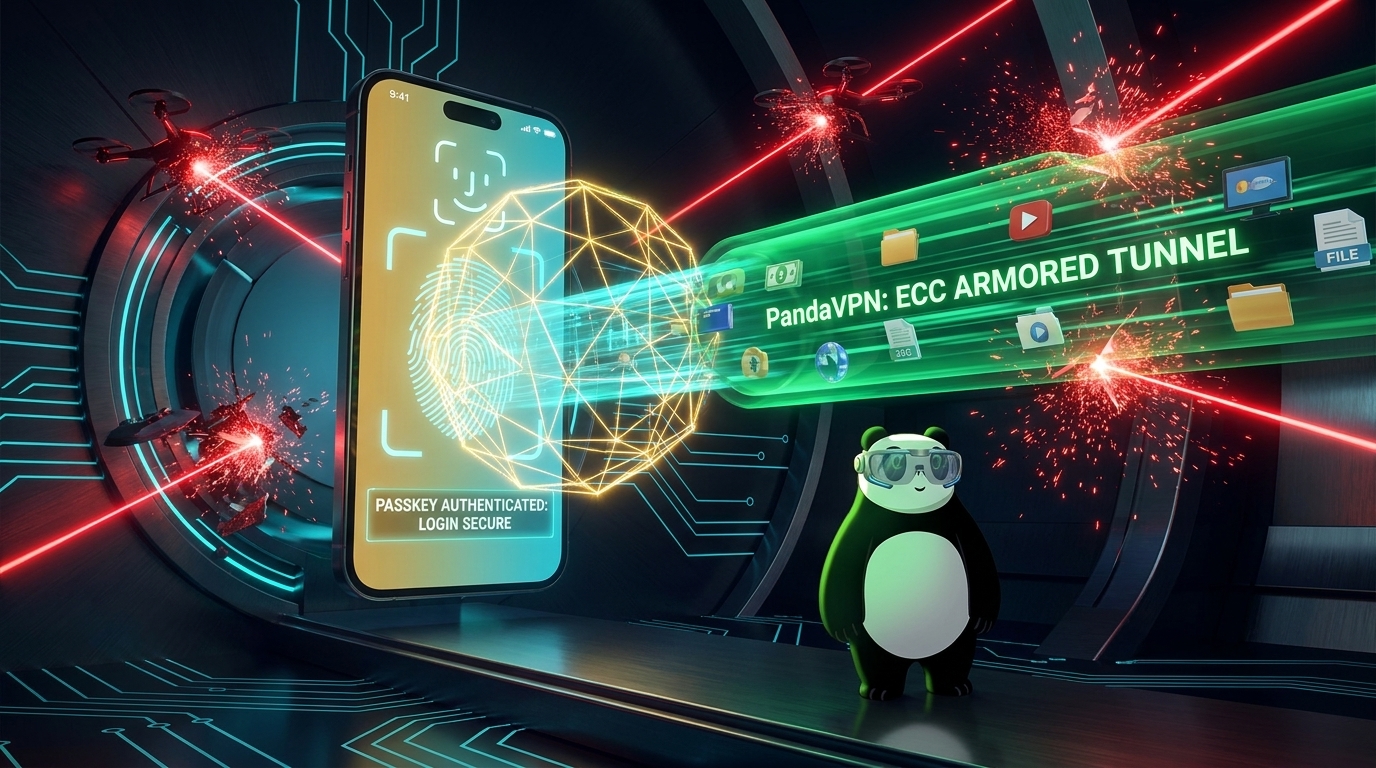
In the tech world’s grand narrative, quantum computing is often depicted as the ultimate “superbrain”—capable of everything from drug discovery to logistics optimization.
However, for the cyber security and online privacy sector, quantum computing represents an approaching “Gray Rhino.” When sufficiently powerful quantum computers emerge, the traditional encryption locks guarding the global internet, banking systems, and standard VPN connections could be shattered instantly.
As a dedicated guardian of user privacy, PandaVPN must confront this reality head-on: How will quantum computing challenge modern VPN encryption, and how are we building an unbreakable defense line ahead of the storm?

1. What is Quantum Computing and Why is it an Encryption Killer?
Traditional computers process information using classical bits, which exist as either a “0” or a “1”. Quantum computers utilize the principles of superposition and entanglement from quantum mechanics, employing quantum bits (qubits) that can exist as both “0” and “1” simultaneously. This unlocks massive parallel computing power.
This exponential leap in processing capability directly threatens the two pillars of modern cryptography:
-
Asymmetric Encryption (Public Key Cryptography): Protocols like RSA, Diffie-Hellman (DH), and Elliptic Curve Cryptography (ECC)—the very technology PandaVPN utilizes for secure connection establishment and identity verification—could be cracked in minutes by quantum computers running Shor’s algorithm.
-
Symmetric Encryption: Algorithms like AES-256, which protect actual data transmission, are more resilient. Quantum computing (via Grover’s algorithm) merely halves their effective security strength (reducing AES-256 to the security level of AES-128), leaving them physically insurmountable.
The critical vulnerability lies in the key exchange phase. If a hacker uses a quantum computer to break the asymmetric encryption during the initial handshake, they can steal the keys to decrypt the symmetric data, rendering the entire encrypted tunnel useless.
2. The Immediate Threat: “Store Now, Decrypt Later” (SNDL)
A common misconception is that because practical quantum computers are still years away, we do not need to worry today.
In cybersecurity, a pressing threat known as “Store Now, Decrypt Later” (SNDL) is already active. Hostile entities and hackers are currently intercepting and storing massive amounts of encrypted internet traffic globally. While they cannot read this data today, they are patiently waiting. Once powerful quantum computers emerge in the coming years, this archived data will be decrypted retroactively.
If you are transmitting sensitive corporate data, personal credentials, or long-term confidential information today, it remains vulnerable to future exposure. This is why transitioning to quantum-resistant architecture is a critical requirement for modern networks.
3. The Innovator: Integrating Post-Quantum Cryptography (PQC) into PandaVPN
To mitigate this crisis, cryptographic bodies like the National Institute of Standards and Technology (NIST) have standardized the first batch of Post-Quantum Cryptography (PQC) algorithms, such as ML-KEM. These rely on complex mathematical problems (like Lattice-based Cryptography) that are mathematically secure against both classical and quantum attacks.
As an industry leader, PandaVPN is evolving its network infrastructure to integrate these next-generation protections seamlessly:
Next-Gen Hybrid Key Exchange
To ensure a reliable and smooth transition, quantum-resistant frameworks utilize a hybrid encryption model. During connection setup, the network combines traditional, high-level ECC (Elliptic Curve Cryptography) algorithms with newly engineered post-quantum algorithms (like ML-KEM).
This dual-layer approach ensures that if a new post-quantum algorithm contains an unforeseen vulnerability, the time-tested ECC layer still safeguards the tunnel. Conversely, against a quantum threat, the post-quantum layer acts as an impenetrable shield.
Complete Protection Across a 6,000+ Server Global Infrastructure
Security is only effective if it is scalable. PandaVPN maintains an expansive network of over 6,000 ultra-fast servers across 100 countries. By implementing patented acceleration technology and high-bandwidth 10Gbps IPLC routes alongside upgraded security protocols, users receive robust, low-latency, and quantum-resistant network performance without compromising connection speeds.
Multi-Platform Security with Zero Configuration
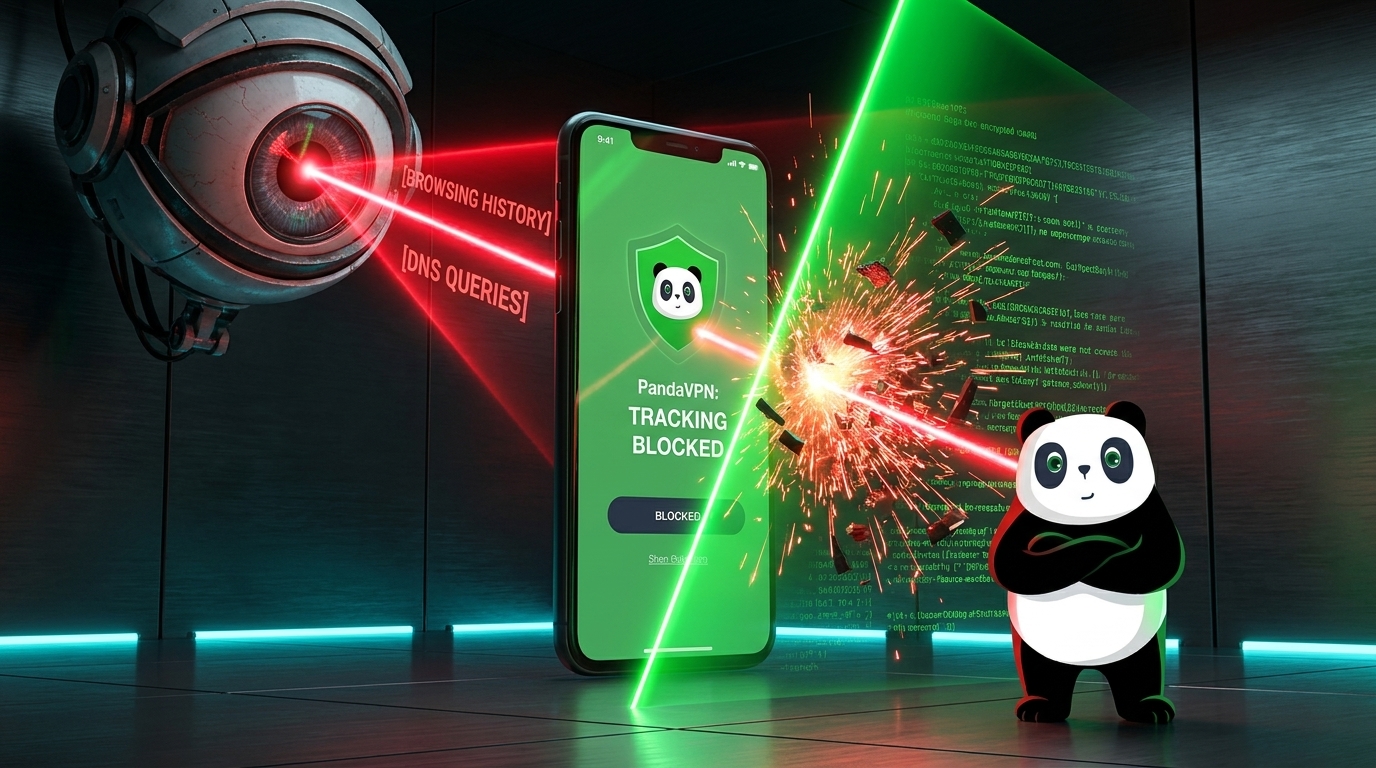
PandaVPN provides specialized, user-friendly clients across all mainstream platforms—including Windows, macOS, iOS, Android, Linux, and Android TV. This ensures that your private data is uniformly protected across multi-platform environments. With a strict No-Logs Policy, your online activities are never recorded, leaving zero historical data footprints for future quantum computers to target.
Conclusion: Future-Proofing Your Digital Privacy
Quantum computing is not a distant sci-fi hazard; its implications for historical data collection are happening right now.
While upgrading the entire global internet infrastructure to post-quantum standards will take time, PandaVPN serves as your immediate first line of defense. By choosing PandaVPN—equipped with the highest level of ECC encryption, an optimized global server network, and future-ready security protocols—you ensure your personal privacy and proprietary data remain secure both today and for decades to come.

Related Posts

Featured Posts